
Remembering Jim Avila
Honoring the lessons I learned from a seasoned correspondent in my earliest days in journalism.

Today I learned that Jim Avila, a former ABC News Senior Correspondent, passed away at the age of 70.
Related: Jim Avila, former longtime ABC News senior correspondent, dies at 70
While I did not work with him for long, the few occasions I spent around him left an impression that has stayed with me for almost twenty years.
Jim had a presence that was firm yet fair, honest, and sharp in a way that only comes from decades of experience in reporting.
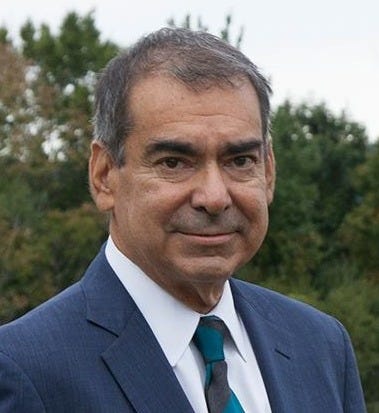
He was tough in the way only seasoned network correspondents can be, clear about what mattered, impatient with excuses, and quick to let you know when you were drifting out of your depth.
I was a student then, shuttling between classes at N.C. Central University and the Law and Justice Unit at ABC News. He did not treat me like a student. He treated me like someone in the room. That mattered more than I realized at the time.
For someone like me, who was still figuring out what journalism even felt like outside a classroom, that kind of clarity leaves a mark years later.
The memory that has been replaying in my head is from Raleigh, North Carolina, in April 2007, when the charges in what became known as the Duke lacrosse rape hoax were dropped and the state Attorney General declared the players innocent.
I have written about part of it in an early draft of another project. I pulled it forward today as a small way to remember him and his work.
The day the charges were dropped, I was in Raleigh, out in the field. Every major news network was there and an army of domestic and international press.
Satellite trucks lined the street outside a downtown hotel, reporters darting between cameras, producers shouting into phones, and techs rolling cable across the sidewalk.
It looked chaotic but felt controlled, like everyone knew their role and the stakes.
CBS News had gone all out. Katie Couric anchored the Evening News live from Raleigh. They had a full crew, multiple cameras, a giant stage, and even took over a conference room and turned it into their newsroom.
ABC’s footprint was modest by comparison. Two live shot positions. One for World News Tonight near the State Capitol and another for ABC News Now, a few blocks away. It was lean and fast, the kind of setup where you had to be sharp because there was no room for error.
Before the AG’s announcement came down, I had already spent time with Jim Avila over the past few months. He had come to Durham for court hearings and interviews and took the crew to lunch. I was the intern at the table, trying to blend in, trying not to say anything stupid.
Jim was funny and blunt, the sort of seasoned correspondent who could size you up in one look. He had this dry way of testing you. Not cruel, just direct. When I told him I still had class after the crew wrapped for the day, he gave me this half smile that said a lot. Almost like he appreciated the grind but also wanted me to understand that the real world did not care about my course schedule.
That came back to me that day.
I was already at the satellite truck with Lara Setrakian, the off-air reporter for the Law and Justice Unit. She was outside in front of a camera doing a live report for ABC News Now when Beth Tribolet, Jim’s producer, called my cell.
“Meet me on the street in 30 seconds.” The phone chirped, letting me know she had ended the call.
When she pulled up, she rolled down the window and pushed a stack of Beta tapes into my hands.
“I need you to feed these to New York. We need them for World News Tonight. Call Slant, tell them who you are and that you are working with me and tonight’s piece for Jim.”
She rattled off the number from memory. Then she said, “I trust you,” and as quickly as she uttered those words, she took off to get Jim to the live shot for World News Tonight with Charlie Gibson.
I had never actually fed tape before. I knew the basics from watching others do it, but this was different.
This was the real thing.
I climbed back into the satellite truck, called Slant, the department that handled incoming feeds (now today called the Network Operations Center or the “NOC”), and repeated every word Beth told me. My voice probably shook as I spoke really fast.
The woman on the other end said, “Okay, we will figure it out. The satellite window is still open. Start feeding what you have.”
So I did.
I sat at the Beta deck and cued through the tapes by hand. Play. Pause. Shuttle. Fast Forward. Play. Rewind. Play.
Pick the best moments from the press conference. Keep going. Do not mess this up. New York took the feed with maybe twenty minutes to spare.
Later that night, I had to do it again for Nightline, feeding an exclusive interview with one of the attorneys from the case. But this time I had to drop the tapes off at the State Capitol location, which I did not know exactly how to get to from where I was.
With no car (or driver’s license at the time), I simply walked in the rain.
And in the era before smartphones, I did not have a map or a MapQuest with directions to print out. While I could see the State Capitol, I was lost and could not find the satellite truck.
Embarrassed to call back to the crew, I ended up calling a fellow NCCU Eagle who worked as a night editor at the News and Observer to get me pointed in the right direction.
When I returned to the hotel, soaked, I had to explain to Jim and Beth why I was delayed getting to the truck.
He gave me the look. It was that same dry, almost amused expression from Durham.
“You walked?! You do not have a car?! You should have called a cab!” he said.
In my head, I thought, “This man must be out of his mind. I didn’t even have that much cash on me to get a cab at that moment, and I just schleped across Downtown Raleigh to get these tapes fed…in the rain.”
A reminder that the job demands you figure it out. The world does not wait. Deadlines do not pause. No excuses. And you do not get points for trying.
That was Jim Avila. Tough but fair. Honest in a way that helped you grow up faster than you planned.
He did not teach by lecturing. He taught by expecting.
When it was all over, well after midnight, I was in a cab back to Durham (paid by ABC) on the phone debriefing with one of my University professors, who was a former producer and director at WTVD-TV, my hands were still shaking from the adrenaline.
No byline. No paycheck. Just trust, instinct, and tapes that made it to air on one of the biggest stories of the year.
That story eventually faded, and people moved to the next assignment.
But the lesson stayed with me. Work clean. Work fast. Figure it out. Do not wait for someone to save you from the moment.
It was a small thing, but tonight I am grateful for it, as it has carried me through my career in tough situations.
Goodnight, Jim, may you rest in peace.
-30-